Kino
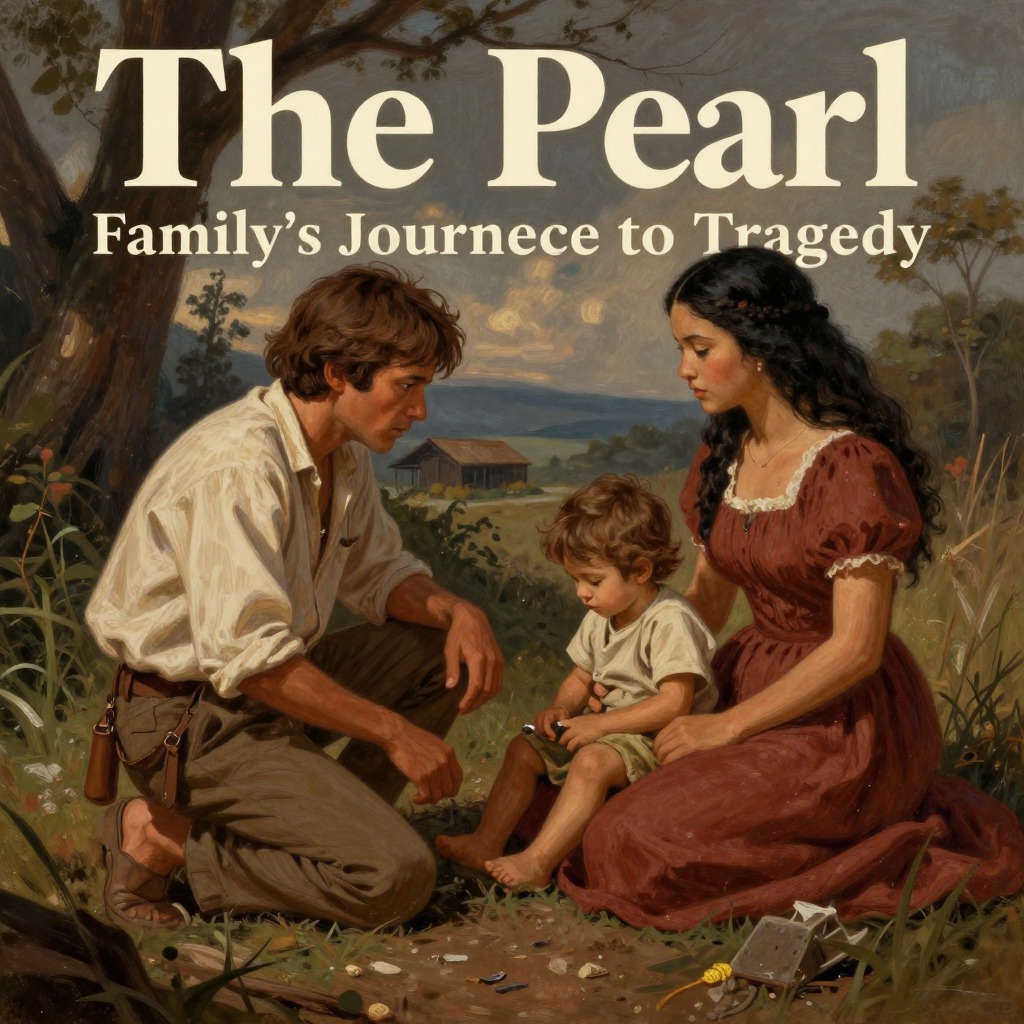
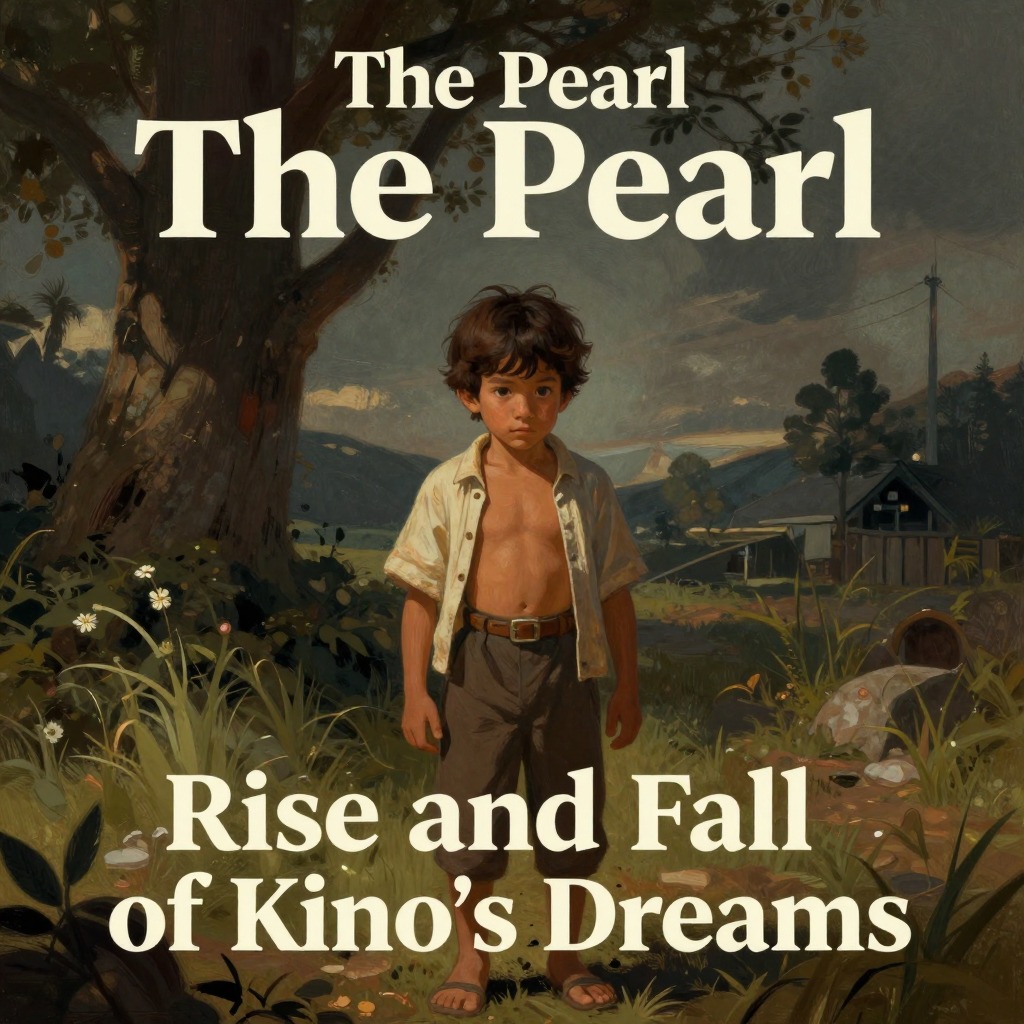
Kino, a young and strong pearl diver, lives with his wife Juana and their infant son Coyotito in a brush house by the shore of a Gulf town. He awakens each morning to the Song of the Family, a melody in his head that represents safety, warmth, and wholeness. His people were once great makers of songs, but no new songs are added; Kino knows the old ones. His life is simple and rooted: he owns a canoe passed down from his grandfather, a source of food and a bulwark against starvation, which he refinishes each year with a secret plaster. He is described as having warm, fierce, bright eyes, a thin coarse mustache, and black hair. His world is one of poverty but also of dignity and deep connection to his family and community.
Life and Plot Trajectory
The trajectory of Kino's life is violently altered by two events: the scorpion sting of his son and the discovery of the great pearl. When Coyotito is stung, Kino's helplessness is immediate. He crushes the scorpion into a paste, but the poison has entered the baby. Juana insists on seeing the doctor, a man of a race that for nearly four hundred years has beaten, starved, robbed, and despised Kino's people. At the doctor's gate, Kino feels weak, afraid, and angry simultaneously; rage and terror go together. The doctor refuses treatment when Kino offers only eight small, misshapen seed pearls. Kino strikes the iron gate with his fist, splitting his knuckles. Later, while diving for pearls to pay for the doctor, Kino finds an enormous oyster. Inside lies the great pearl, perfect as the moon, as large as a sea-gull's egg. He howls with emotion, and the news spreads through the town like a wave. The pearl becomes the Pearl of the World, and Kino's future is suddenly filled with visions: a church marriage, new clothes, a rifle, and most importantly, an education for Coyotito. He declares, "My son will read and open the books, and my son will write and will know writing. And my son will make numbers, and these things will make us free." But the pearl also brings the Song of Evil into his head, a savage, secret, dangerous melody that interweaves with the Song of the Family.
Key Actions and Objectives
Kino's primary objective becomes the preservation and sale of the pearl for a fair price, a goal that drives every subsequent action. He refuses the collusive pearl buyers' offer of a thousand pesos, insisting the pearl is worth fifty thousand. He declares he will go to the capital to sell it. When Juana, sensing the evil, attempts to throw the pearl back into the sea, Kino intercepts her, strikes her in the face with his clenched fist, and kicks her in the side. He hisses at her like a snake. This act of violence against his wife marks a profound change. Later, when attacked in the dark, he kills a man with his knife. He feels no remorse, only a searing rage when he discovers his canoe has been broken. "The killing of a man was not so evil as the killing of a boat," the narrative states. He becomes an animal, living only to preserve himself and his family. He leads his family on a desperate flight into the mountains, pursued by trackers. In the final confrontation, he strips off his white clothes, creeps down the rock face like a slow lizard, and attacks the trackers. He kills the first with his knife, the second with a rifle, and deliberately shoots the third between the eyes. His actions are those of a "terrible machine," cold and deadly.
Relationships and Conflict
Kino's central relationship is with Juana, who is both his partner and his conscience. She is obedient, respectful, and patient, but also possesses an iron will. She is the one who insists on seeing the doctor, and she is the one who repeatedly warns that the pearl is evil and will destroy them. Kino's abuse of her is a measure of his corruption. Yet, in the end, she refuses to throw the pearl back herself, saying "No, you," allowing him to reclaim some part of his manhood. His relationship with his brother, Juan Tomás, provides a voice of reason and caution. Juan Tomás warns Kino that he is defying not just the pearl buyers but "the whole structure, the whole way of life." He hides the family after the murder and the burning of Kino's house, but his warning is prophetic. Kino's conflict is not only with the doctor, the pearl buyers, and the trackers, but with the entire colonial system that has oppressed his people for four hundred years. The doctor's refusal to treat Coyotito, the pearl buyers' collusion, and the priest's sermon on staying in one's station all reinforce a world designed to keep Kino in his place. The pearl, which he believes will break him out, instead becomes the instrument of his destruction.
Change and Ending
Kino undergoes a radical transformation from a man of simple dignity to a figure of violence and obsession. He confesses to his brother, "This pearl has become my soul. If I give it up I shall lose my soul." The pearl, once a vision of hope, now shows him only a huddled dark body with shining blood dripping from its throat, Juana with her beaten face, and Coyotito's face thick and feverish from the medicine. After killing the trackers, he hears the keening, moaning, rising hysterical cry from the cave: the cry of death. Coyotito has been shot. Kino and Juana return to La Paz, walking side by side, not in single file as before. Juana carries her shawl like a sack, and in it is a small, limp, heavy bundle crusted with dried blood. Kino carries a rifle across his arm. They walk through the city as though it were not there, their eyes staring straight ahead. At the water's edge, Kino looks into the pearl and sees it as gray and ulcerous, with evil faces and the light of burning. He sees Coyotito lying in the little cave with the top of his head shot away. He draws back his arm and flings the pearl with all his might into the sea. The pearl settles to the sand bottom, and a crab raises a little cloud of sand, and when it settles, the pearl is gone. The music of the pearl drifts to a whisper and disappears.
Narrative Role and Evaluation
Kino functions as an Everyman figure in Steinbeck's parable, but he is also a specific, culturally situated character whose tragedy is inseparable from the history of colonial exploitation. His story is a reverse of the biblical "pearl of great price": instead of gaining heaven, he loses everything he values. His initial innocence and his later fanaticism are both rendered with psychological depth. The narrative traces his fall from a state of grace, where the Song of the Family is his guiding melody, to a state of isolation and violence, where the Song of Evil dominates. His final act of throwing the pearl back is not a triumph but a stoic acceptance of defeat. He has learned to recognize evil, but only after it has destroyed his son. The people of La Paz say that Kino and Juana seemed to be removed from human experience, that they had gone through pain and had come out on the other side. Kino's journey is a descent into the dark night of the soul, and his return is marked by an ineradicable grief that leaves him, and the reader, with a profound sense of loss.